
School Risk Management Success Stories: Safety Solutions from Your Peers
Fund members are stronger together. Discover proven school risk management solutions shared by your peers.
Fund members harness their unique experience and risk management expertise to create safe, welcoming learning environments. By participating in the Fund, members share knowledge and expertise for the benefit of the entire membership. Consider how you can adopt or adapt your peers’ solutions to manage risk in your organization.
Your Peers Want to Hear from You
Every district has lessons learned and success stories worth sharing. Your experience could help fellow members address similar challenges and build safer, more resilient learning environments. If you'd like to share your story with your peers, simply email the Fund communications team, and we will reach out to you.
Featured Member Solutions for the New School Year
- Community at the Crosswalk: Mesquite ISD’s Story
- ESC Leverages Employee Perspectives Toward Safer Workplaces
- Arlington ISD Shares its Heat Safety Blueprint
More Member Solutions
Employee Engagement
Region 1 ESC Leverages Employee Perspectives Toward Safer Workplaces
Challenge: Many school districts rely on a select group of employees to respond when an incident happens. That system works well for addressing accidents after they occur, but it can mean missing valuable chances to prevent accidents in the first place. When conversations about learning from incidents don’t happen, the opportunity to reduce risk and control related costs can slip by.
Solution: ESC Region 1’s SMART committee brings together team members from across the organization. The committee meets once a month, and members work together to:
- Review workplace incidents and near misses
- Conduct walkthroughs and safety audits
- Recommend corrective actions and track completion
- Promote safety awareness campaigns and training
Irving ISD Breaks Down Silos to Build Up Safety

Workers' compensation claims fell by about 50% over the previous year after Irving ISD expanded participation in its loss control committee.
Challenge: At Irving ISD, safety is not a top-down initiative. The team needed a forum where employees could contribute their unique perspectives and experiences toward safer, more productive workplaces.
Solution: The loss control committee includes representatives from across the district, including key stakeholders such as leadership, safety and security, human resources, special education, and auxiliary. The collaborative structure of the committee, combined with interactive activities such as open forums and cross- departmental discussions, provided valuable insight into the unique safety challenges faced across the district.
The committee’s achievements include:
- Implemented a district-wide safety audit protocol
- Standardized incident reporting procedures
- Launched monthly safety briefings to improve hazard identification, response time, and staff awareness
- Digitized the injury reporting process
- Updated bona fide offer of employment documentation to align with legal and operational standards
Emergency Management
Beeville ISD Launches Communitywide Active Shooter Drill

"I've never seen somebody grab a binder and flip to chapter 7 to find out what they’re supposed to do during an emergency. We learn a lot about our abilities and our limits during these exercises," said Beeville ISD Police Chief Arturo Gamez.
Challenge: Beeville ISD faced concerns from the community about the rise in school violence. Parents wanted reassurance that the district could respond quickly, communicate effectively, and reunite students and families safely.
Solution: Beeville ISD Chief of Police Arturo Gamez and his team coordinate a communitywide active shooter drill with support from the board and district leadership. The drill includes:
- Coordination with community partners such as law enforcement, EMS, fire departments, and hospitals
- Realistic active-shooter drills
- Training to ensure staff and students know what to do during an emergency
- A formal process for reunifying students with their families
Round Rock ISD Secures No-Cost NARCAN
Challenge: According to the CDC, 14% of school-aged children reported misusing prescription opioids. Overdoses can easily happen as younger children sometimes mistake fentanyl for candy and dealers sell other drugs laced with fentanyl.
Solution: Round Rock ISD partnered with Williamson County EMS, Round Rock Fire Department, and Bluebonnet Trails Community Services to co-locate Naloxone, or NARCAN, with every AED device throughout the district, all at no cost to the district. NARCAN is replenished when it expires or gets dispensed.
Taylor ISD Shores Up Student/Family Reunification
Challenge: During an emergency, nothing is more important to families than bringing their children home safely. Taylor ISD’s outdoor reunification sites were not equipped for severe weather or extended emergencies. And with increasing state requirements for comprehensive emergency preparedness, including random intruder detection audits, Taylor ISD needed robust, tested partnerships that could activate quickly.
Solution: The district developed a comprehensive community partnership network centered on formal Mutual Aid Agreements with local churches and community organizations. The solution established accessible reunification sites that offer adequate parking, restrooms, and communication. Taylor ISD maintains responsibility for student supervision and parent notification, while community partners provide secure facilities and basic utilities.
Transportation Safety
Austin ISD Leverages No-Cost Security Assessment
Challenge: The district’s three bus terminals are targets for theft, vandalism, and security breaches. In fact, criminals recently broke into two facilities and stole catalytic converters from buses. Outdated infrastructure, inconsistent practices, insufficient training, and lack of centralized coordination made it difficult to secure the terminals.
Solution: Austin ISD took advantage of the Transportation Safety Administration (TSA) Security Enhancement Through Assessment program. Through the program, TSA experts:
- Identified critical assets, vulnerabilities, and threats at each transportation terminal
- Conducted risk assessments based on likelihood and impact (active shooter, cyberthreats, natural disasters)
- Developed mitigation strategies tailored to each transportation terminal
- Returned to each terminal and assessed progress
- Collaborated with district staff to build a long-term sustainability plan
- Trained drivers on their role in safe operations
How Hawley ISD Reimagined Student Safety

Hawley ISD equips drivers with an onboard tablet that provides turn-by-turn directions, tracks bus locations in real time, and manages rider attendance.
Challenge: Hawley ISD faced concerns about lost time, delayed pickups/drop-offs, and an inability to confirm whether students safely boarded or disembarked buses. The lack of real-time data often left parents and administrators frustrated, as communication regarding delays or issues was reactive.
Solution: The transportation department invested in software that provides real-time tracking of bus routes and student check-ins. The system enabled the team to control bus delays, monitor bus locations live, and deliver digital confirmation to parents when their students are checked in and out. Hawley ISD also implemented a dedicated, after-hours phone line where parents get quick answers to their transportation questions.
Community at the Crosswalk: Mesquite ISD’s Story
Challenge: Crossing guards and traffic flaggers rank among the top fifth of occupations for on-the-job fatality rates.
Solution: Mesquite ISD’s risk management team works with five lead guards responsible for handling timecards, filling in during staff shortages, building trust among crossing guards, and training/mentoring new crossing guards. When the school year starts, lead guards visit each intersection to go over best practices, protocol, and specific information that guards should know about their crosswalks.
Inside Prosper ISD’s Employee-Driven Safety Initiative

"Our employees often spot risk trends long before leadership sees them in reports. When they help design the solution, they are more invested in applying and sustaining it," said Teri Mapengo, Prosper ISD Transportation Director
Challenge: The transportation department faced a growing challenge of preventable school bus accidents that disrupted operations, increased maintenance costs, and impacted public confidence. District growth led to additional routes and staff, so Prosper ISD needed a scalable solution that would strengthen accountability, improve driver safety practices, and foster a culture of continuous improvement.
Solution: Prosper ISD implemented a multi-layered transportation safety strategy focused on professional development, accountability, and communication. The strategy includes:
- Monthly safety meetings to reinforce expectations and address incident trends
- Behind-the-wheel training reinforces critical driving practices and decision-making skills
- Revised accident consequence protocols that set clear expectations for safe conduct
- Enhanced retraining for drivers involved in incidents
- Interactive, scenario-based driver training course
- Monthly sessions focus on strategies to reduce distractions, promote positive bus behavior, and support drivers in maintaining control and focus
- A safety suggestion box that empowers drivers to voice concerns and identify recurring issues, resulting in quicker mitigation of safety risks
Workplace Safety
A Simple Scan Makes a Big Impact for Arlington ISD Safety Efforts

Arlington ISD's no-blame reporting initiative has uncovered relatively minor risks that could have caused serious injuries, helping control lost workdays and operational disruptions.
Challenge: When workplace injuries were on the rise in Arlington ISD, staff investigated the facts and identified the root causes. It turned out that more than 50% of incidents could have been prevented. The district’s risk management team needed to address preventable injuries in a user-friendly way that would not overwhelm employees, who are busy doing their day-to-day jobs.
Solution: The risk management team strategically placed posters across the district. The posters included a QR code linking to a simple form that made it easy for employees to report hazards that could cause injuries:
- Reports go directly to the risk management team.
- Within 24 to 48 hours, employees receive follow‑up communication confirming the report and outlining next steps.
- Often, members of the risk management team visit the campus or facility to assess the concern in person.
Arlington ISD Shares its Heat Safety Blueprint
Challenge: Heat is the leading cause of weather-related fatalities. Maintenance, grounds, and other teams working outdoors are not the only employees at risk. Teams that work in hot indoor spaces such as kitchens and boiler rooms also need to know how to protect themselves.
Solution: Arlington ISD committed its heat safety program to writing. The team revisits the program every year to ensure it addresses evolving risks. The program is built on four pillars:
- Staff training
- Water and electrolytic popsicles at workstations
- Shade structures for rooftop/outdoor crews
- A buddy system where employees monitor each other for signs of heat stress
- Personal protective equipment
Denton ISD Helps Employees Master New Equipment Safely
Challenge: New equipment introduces new injury risk if employees don’t know how to use it properly.
Solution: The Denton ISD custodial team invites equipment vendors to visit campuses and train employees to safely use their products.
Pro tip: Consider making equipment training part of your contracts with vendors.
Round Rock ISD Controls Slips and Falls from the Ground Up
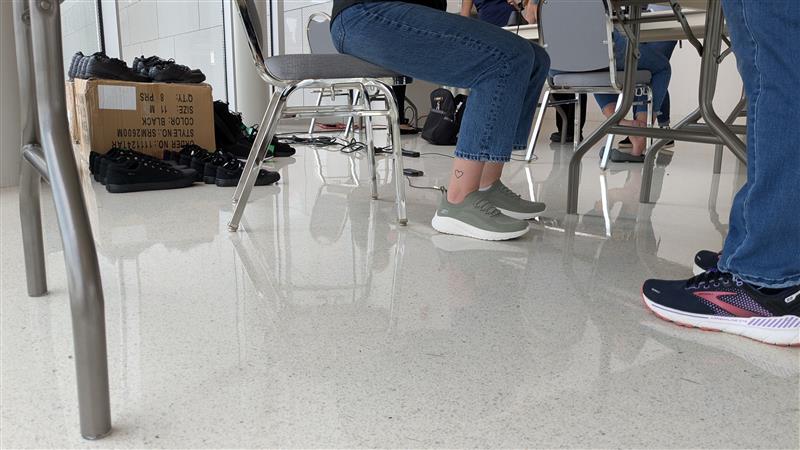
Round Rock ISD's comprehensive safety program provides auxiliary staff with slip-resistant shoes designed for their unique jobs.
Challenge: Slips, trips, and falls accounted for the lion's share of workers' compensation claims reported by Round Rock ISD custodians. Wet kitchen floors, greasy transportation shops, and ice-covered bus steps increase the risk for all operations team members.
Solution: The district worked with a vendor to provide staff with footwear designed for their unique roles. Employees received subsidies based on need. For example, custodians prioritized slip resistance, while mechanics required added protection such as composite toes.
Your Peers Want to Hear from You
Members appreciate learning about each other's solutions to shared risk management challenges. If you'd like to share your story with your peers, simply email the Fund communications team, and we will reach out to you!
Risk Management Services
Established in 1974, the Fund offers comprehensive coverage that responds to the risks faced by public schools across Texas. Guided by a 19-member board of school administrators and board trustees, employees at TASB administer the Fund and provide solutions to help members maintain safe and secure places of learning.